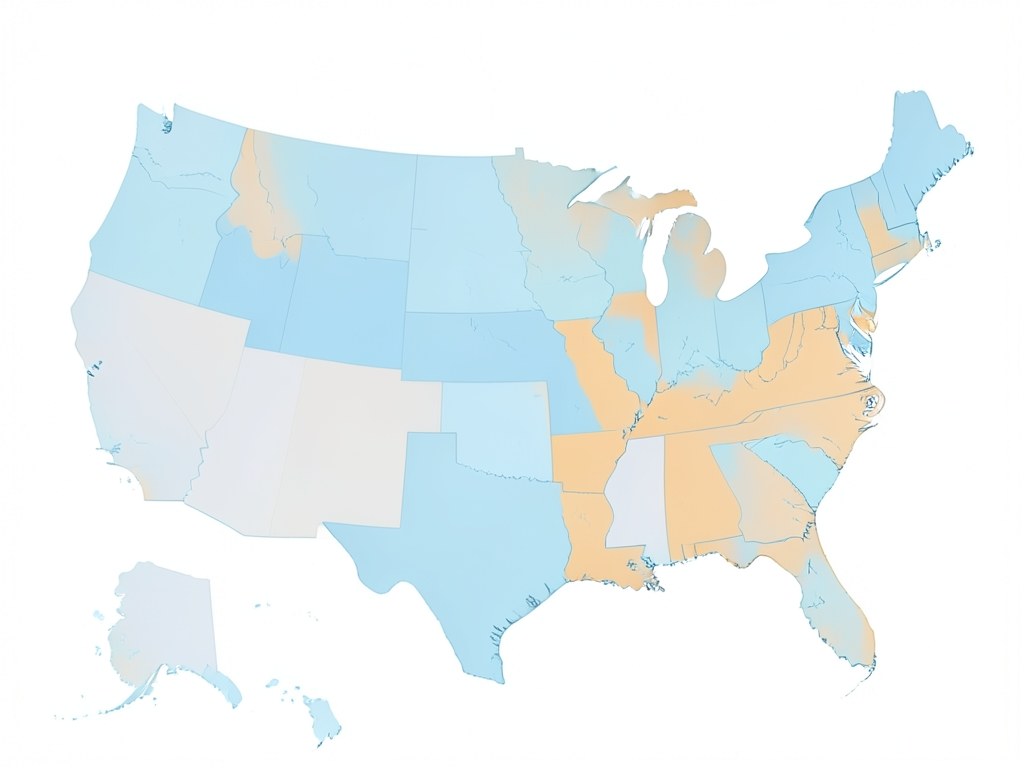
State Payday Lending Laws
Payday lending is a state-regulated industry. While federal laws like the Truth in Lending Act require lenders to disclose loan terms, states decide the more specific rules that govern payday loans. This means the cost, availability, and terms of payday loans can vary significantly depending on where you live.
Most states have enacted laws to address consumer protection concerns, such as high costs and the risk of falling into a debt cycle. State laws often set caps on fees, limits on loan amounts, and requirements for loan terms. Some states have chosen to ban payday lending altogether.
Because states have different priorities and legislative histories, the rules are not uniform. It is important to know the regulations in your state before taking out a payday loan.
Sources: University of Notre Dame, Consumer Financial Protection Bureau
Types and State Regulation: Rate Caps, Bans,
State payday loan regulations can be categorized into different types. Common regulatory tools include price caps, limits on loan amounts and terms, and restrictions on loan renewals. Some states also require lenders to be licensed and to comply with specific operational rules.
Price caps set the maximum amount a lender can charge for a loan. For example, some states cap fees at $15 per $100 borrowed, while others limit interest rates to 36% APR. Loan amount caps restrict how much you can borrow, and term limits set minimum or maximum loan durations. Some states also regulate how many loans a borrower can have at one time or how often they can renew a loan.
In addition, some states have effectively banned payday lending by setting such low interest rate caps that lenders cannot profitably operate. For instance, New York and New Jersey have usury caps that make payday loans impractical. Other states, such as South Dakota and Utah, impose no limit on price, allowing lenders to charge very high rates.
Sources: University of Notre Dame, Consumer Financial Protection Bureau
State-by-State Variations and Examples
The practical impact of state regulation is visible in how payday lending operates in different states. The table below compares the rules in three states with different regulatory approaches: Florida, California, and Colorado. This illustrates how loan terms, fees, and rates can vary widely.
These examples are not exhaustive but show the range of regulatory approaches. Always check your own state's laws, as they can change.
Table notes: The data are drawn from state statutes and official state resources.
Here are some examples of how these variations affect payday loans in practice:
- In Florida, the maximum loan amount is $500, with a maximum term of 31 days. The fee is capped at 10% of the amount borrowed plus a $5 verification fee. Additionally, Florida prohibits borrowers from having more than one outstanding payday loan at a time and requires a 24-hour waiting period after paying off a loan before taking another.
- California caps the loan amount at $300, with a maximum term of 31 days, and the fee is 15% of the face amount of the check.
- Colorado requires payday loans to have a minimum term of six months and caps the interest rate at 36% APR plus an origination fee. This structure effectively makes short-term payday loans less profitable.
Sources: National Conference of State Legislatures, Florida Office of Financial Regulation
State Payday Loan Comparison Table
Compare the regulations in Florida, California, and Colorado to see how they differ.
| State | Maximum Loan Amount | Maximum Loan Term | Fee Cap |
|---|---|---|---|
| Florida | $500 | 31 days | 10% of amount borrowed + $5 verification fee |
| California | $300 | Up to 31 days | 15% of face amount of check |
| Colorado | $500 | Minimum 6 months, no maximum | 36% APR + origination fee |
Sources: National Conference of State Legislatures, Florida Office of Financial Regulation
Federal Rules and Military Protections
While most payday loan regulation occurs at the state level, there are federal rules that apply. The Truth in Lending Act requires payday lenders to provide borrowers with Truth-in-Lending statements that disclose the cost of the loan, including the APR.
Active duty servicemembers and their dependents receive additional protection under the federal Military Lending Act (MLA). The MLA caps the Military Annual Percentage Rate (MAPR) at 36% for many types of consumer credit, including payday loans. This applies regardless of state law.
Sources: University of Notre Dame, Consumer Financial Protection Bureau
How to Check a Lender's State License and Compliance
Lenders in states that allow payday lending are typically required to be licensed by a state agency. This agency oversees their compliance with state laws. You can check a lender's license status through that agency before doing business with them.
The specific agency varies by state. For example, in Florida, the Office of Financial Regulation's Division of Consumer Finance regulates payday lenders. Many states provide online databases where you can look up licensed lenders.
When you consider a lender, it is wise to verify that they are licensed in your state. If you have concerns about a lender's compliance, you can contact the state regulator.
What Happens When a Lender Operates Across State Lines
The rise of online payday lending has raised questions about which state's rules apply. Generally, online lenders must comply with the laws of the state where the borrower resides. However, enforcement can be challenging.
Some lenders operate as tribal lenders and may claim sovereign immunity, which can complicate state regulation. The legal landscape for these lenders is still evolving, and borrowers should be cautious.
Sources: University of Notre Dame, Consumer Financial Protection Bureau
Consumer Protections and Complaint Resources
Many states provide consumer protections beyond standard licensing, such as grace periods or restrictions on loan rollovers. For example, Florida law offers a 60-day grace period without additional charge if a borrower cannot pay in full, but it requires the borrower to make an appointment with a consumer credit counseling service within 7 days and complete the counseling within the grace period.
If you believe a payday lender has violated state law, you can file a complaint with your state's consumer protection agency or the state regulator that oversees payday lenders. The Consumer Financial Protection Bureau (CFPB) also handles complaints about financial products and services.
Sources: Consumer Financial Protection Bureau, Florida Office of Financial Regulation
Frequently asked questions
Is payday lending legal in every state?
No, payday lending is not legal in every state. Some states have laws that effectively prohibit payday loans by setting very low interest rate caps, while others have chosen not to allow the practice. For example, New York and New Jersey have usury caps that make payday lending impractical. Additionally, some states do not have payday lending because state law does not permit it or because lenders have decided not to operate under the rates and fees allowed in those states.
Sources: University of Notre Dame, Consumer Financial Protection BureauWhat is the maximum APR a payday lender can charge?
There is no single national APR cap. State laws set the limits. For example, a typical two-week payday loan with a $15 fee per $100 borrowed equates to an APR of almost 400%. Some states cap the APR at 36% or lower, while others allow higher rates. Under the federal Military Lending Act, active duty servicemembers and their dependents are protected by a 36% cap on the Military Annual Percentage Rate.
Sources: Consumer Financial Protection BureauHow can I find out if a lender is licensed in my state?
The state agency that regulates payday lenders in your state typically provides a way to check a lender's license. For instance, in Florida, the Office of Financial Regulation oversees licensing. Many states publish online lists of licensed lenders. You can contact the regulatory agency directly to confirm a lender's status.
Sources: Florida Office of Financial RegulationWhat should I do if I think a payday lender violated state law?
If you believe a payday lender has violated state law, you should file a complaint with the state regulatory agency that oversees payday lenders in your state. In many states, this is the same agency that licenses lenders. You may also file a complaint with the Consumer Financial Protection Bureau (CFPB), which handles consumer financial issues.
Sources: Consumer Financial Protection Bureau, Florida Office of Financial RegulationWhat if my state bans payday loans – can I still get one online?
If your state bans payday loans, it is unlikely you can legally get one online. Online lenders must generally comply with the borrower's state laws. However, some lenders may attempt to operate across state lines, and tribal lenders may claim sovereign status, which can complicate matters. If payday lending is prohibited in your state, other options may be available, but you should be cautious of any lender that tries to circumvent your state's laws.
Sources: University of Notre Dame, Consumer Financial Protection BureauSources
- Summary Payday Lending State Statutes — National Conference of State Legislatures
- Assessing the Effects of State Payday Lending Regulation on Payday Loan Usage and Economic Well-Being — University of Notre Dame
- What is a payday loan? — Consumer Financial Protection Bureau
- Payday Lenders (Deferred Presentment Providers) — Florida Office of Financial Regulation